

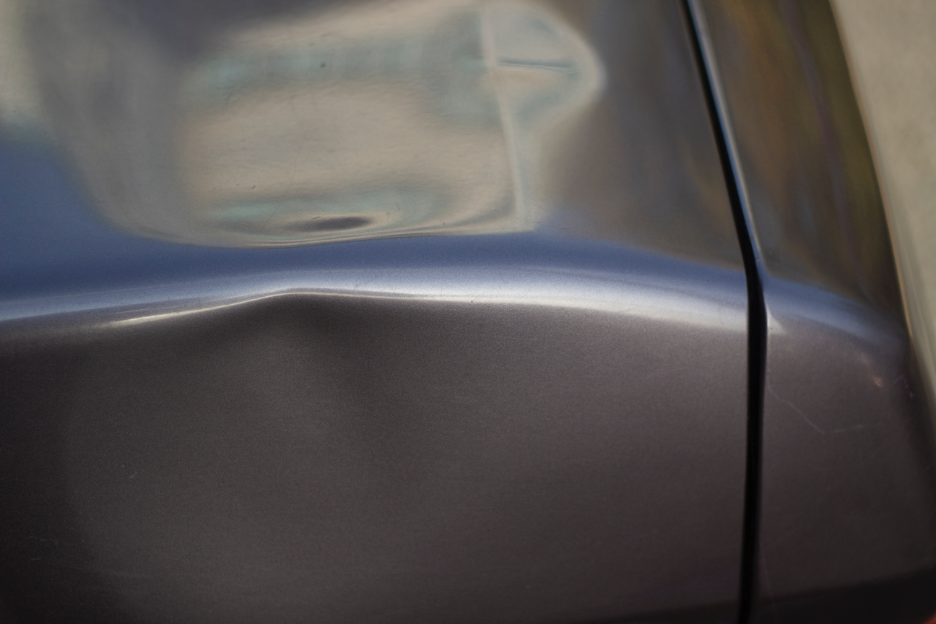
What Types of Dents Cannot Be Repaired with PDR? A Paintless Dent Repair Shop in Wheaton, Illinois Explains
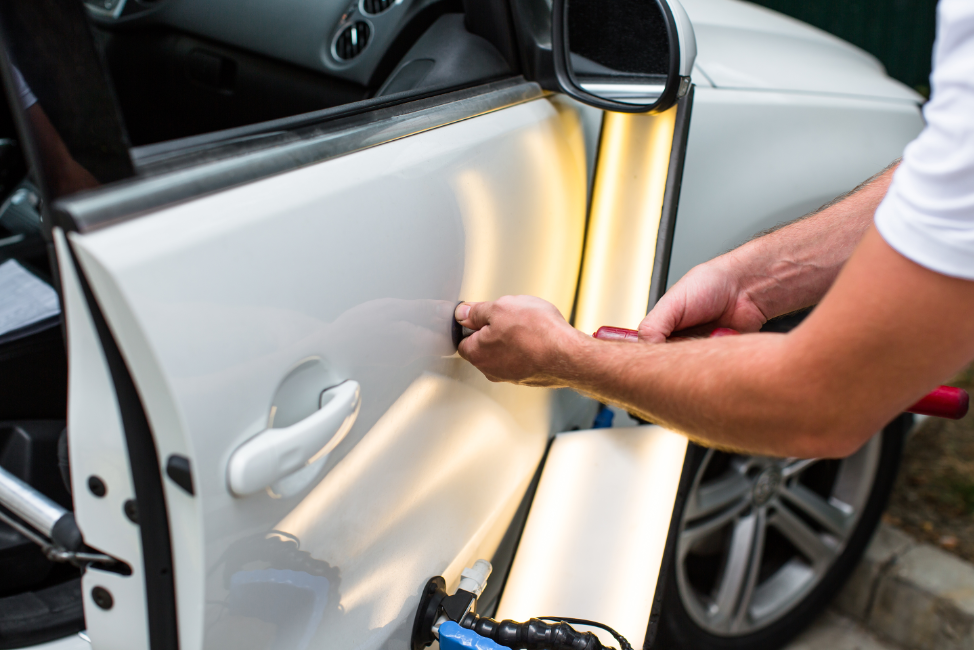
Paintless dent repair can be a good option for certain dents, especially when the paint is still intact and the damaged area can be accessed from behind the panel. Instead of sanding, filling, and repainting, PDR uses specialized tools to carefully work the dent back into shape.
Below, this paintless dent repair shop in Wheaton, Illinois is going to discuss what types of dents usually cannot be repaired with PDR, and we’ll also explain when a more traditional auto body repair may be needed.
Dents with Cracked or Chipped Paint
PDR is generally most effective when the paint has not been damaged. If the dent has cracked, chipped, scratched, or broken the paint surface, paintless repair may not be enough.
Once the paint is damaged, the repair usually needs to address both the shape of the panel and the finish. If the paint is left unrepaired, the exposed area may become more vulnerable to rust or further deterioration.
Deep Dents May Not Respond Well to PDR
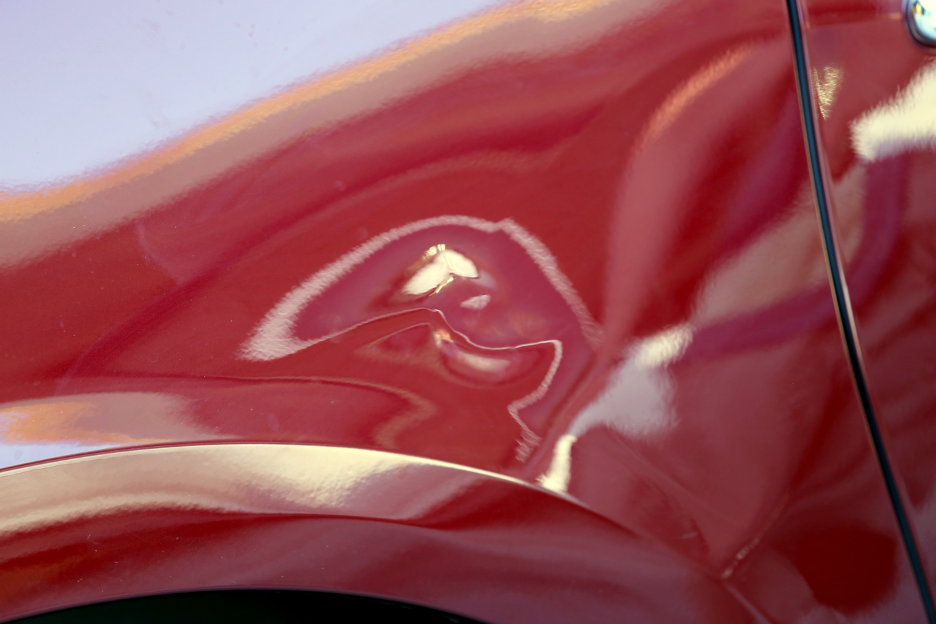
Very deep dents can be difficult to repair with PDR because the metal may be stretched too far. When the impact is severe, the panel may not return to its original shape cleanly.
A shallow dent with smooth edges may respond well to PDR, but a sharp, deep dent can leave distortion even after the metal is worked back into place. In these cases, traditional auto body repair may create a better finished result.
The depth, location, and shape of the dent all matter.
Sharp Creases Can Be Difficult to Repair
Sharp creases are another type of damage that may not be ideal for paintless dent repair. A crease can stretch and distort the metal in a way that is harder to reverse without additional body work.
Some minor creases may be improved with PDR, depending on the paint condition and access to the panel. However, long, sharp, or severe creases may still leave visible marks.
A paintless dent repair shop in Wheaton, Illinois can inspect the crease and determine whether PDR is realistic or whether another repair approach is needed.
Damage on Panel Edges Can Be More Complicated
Dents near the edge of a panel can be harder to repair with PDR. The edges of doors, fenders, hoods, and quarter panels are often reinforced or shaped differently than the center of the panel.
Because these areas can be less flexible, the metal may not move back into place as easily. Access may also be limited, which can make it harder to use PDR tools effectively.
Edge damage does not always rule out PDR, but it does need to be evaluated carefully.
Dents in Hard-to-Reach Areas May Not Be Good Candidates
PDR depends heavily on access. In many cases, the technician needs to reach the back side of the dent to massage the metal back into shape.
If the dent is behind bracing, near sealed areas, inside a tight structural section, or in a spot where tools cannot reach, PDR may not be possible. Sometimes trim or panels can be removed to improve access, but not every dent can be reached safely or effectively.
A proper inspection can help determine whether the location of the dent allows for paintless repair.
Dents with Stretched Metal May Need Traditional Repair
When metal stretches during an impact, it may not return to its original shape with PDR alone. Stretched metal can create ripples, waves, or distortion that remains visible even after the main dent is reduced.
This type of damage is more common with larger impacts, sharp dents, or dents on flatter panels where imperfections are easier to see. In these cases, additional body work may be needed to restore the panel properly.
A professional paintless dent repair shop in Wheaton, Illinois can help determine whether the metal still has enough flexibility for PDR.
Collision Damage Often Requires More Than PDR
PDR is not always the right solution after a collision. If the damage involves cracked paint, broken parts, damaged trim, misaligned panels, or structural concerns, the repair may require a more complete auto body approach.
Collision damage can also affect areas behind the visible dent. A panel may look like it has only surface damage, but brackets, clips, sensors, or nearby components may also be affected.
This is why collision-related dents should be inspected before deciding on the repair method.
Previous Repairs Can Affect the Outcome
If a panel has been repaired or repainted before, PDR may be more complicated. Previous body filler, paint work, or hidden damage can affect how the panel responds to pressure.
In some cases, the paint may be more likely to crack during the repair process. In others, the metal may not move the way an original, undamaged panel would.
A technician may need to look closely at the panel history and condition before recommending PDR.
Large Dents Are Not Always Good Candidates
Some large dents can be repaired with PDR, but size can become a problem when the metal is stretched, the paint is damaged, or the dent covers a complex area of the panel.
A large, shallow dent with intact paint may be a good candidate. A large dent with sharp edges, creases, or paint damage may not be.
The overall shape of the dent matters just as much as the size.
Looking for a Paintless Dent Repair Shop in Wheaton, Illinois?
PDR may not be the best option for dents with cracked paint, deep impacts, sharp creases, stretched metal, edge damage, limited access, previous repairs, or collision-related damage. If you are unsure whether your dent can be repaired with PDR, a paintless dent repair shop in Wheaton, Illinois can inspect the damage and explain your options.
At Lombard Body & Fender, we help drivers with paintless dent repair, auto body repair, refinishing, and collision repair services. Contact us to schedule an estimate and find out which repair option makes sense for your vehicle.